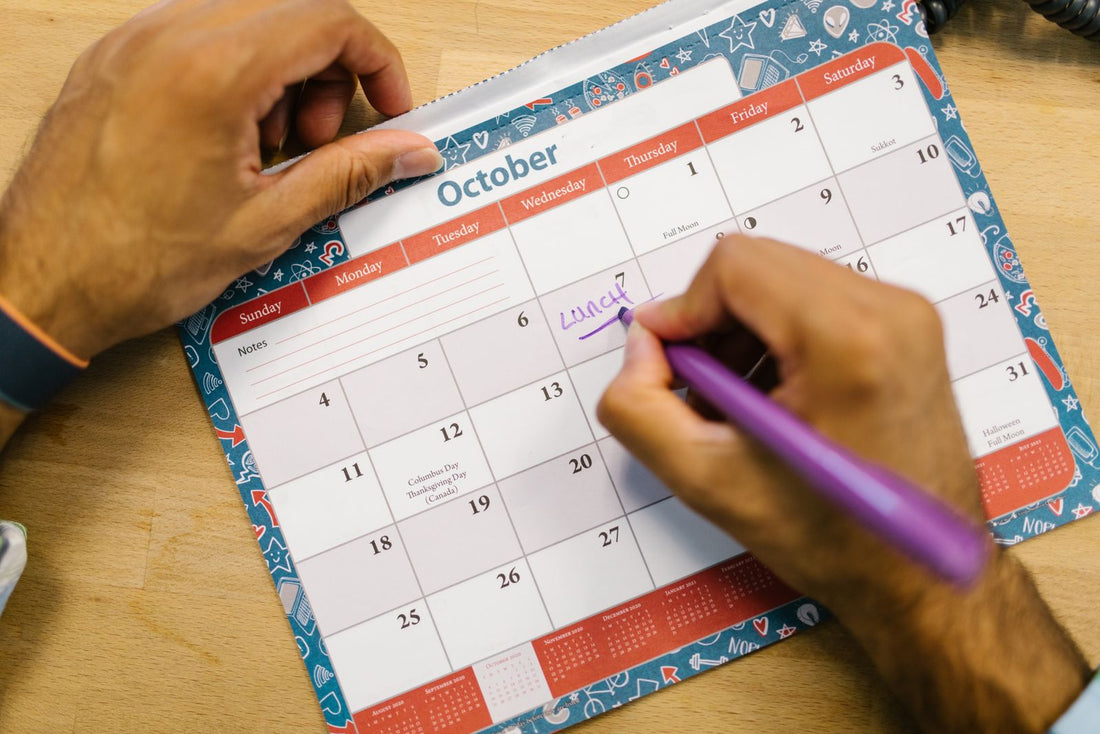
Most Q4 calendars are really discount calendars. Somebody opens a spreadsheet in September, drops in Halloween, Singles Day, Black Friday, Cyber Monday, Green Monday and the shipping cutoff, then writes a percentage next to each one. By December the brand has trained its entire list to wait, and the year closes with record revenue and thinner profit than the year before.
You can plan the same calendar without the percentages. Below is a week by week Q4 plan for Shopify brands, built around real moments shoppers already care about, with a full price mechanic attached to each one instead of a markdown. Build it in September and October, because the brands that win Q4 are not the ones with the biggest discount, they are the ones whose offer was already live before the noise started.
Why the discount calendar costs more than it looks
Run the arithmetic on a single order before you commit to a season of them. On a $100 order at a 55 percent gross margin, you keep $55. A 20 percent sitewide discount takes $20 off the top, so you keep $35. That one decision just handed over 36 percent of your gross profit on every order, including every order from a customer who was going to buy at full price anyway.
The second cost is slower and worse. A discount run every year in the same week becomes the price. Shoppers who bought at 30 percent off in November do not come back in February at full price, they come back next November. That is price anchor erosion, and it is the reason a lot of brands post a great Q4 and a terrible Q1. We wrote about the mechanics of that in discount fatigue.
October: build the audience, do not spend the margin
Weeks 1 and 2: launch the list growth play
October is the cheapest month of Q4 to acquire an email address, because you are not bidding against every brand in your category yet. Put a game or a quiz on the site now and grow the list you will actually sell to in November. The Sak saw 5x quiz conversion against a standard email popup, and Jones New York pulled 5x revenue per send out of dormant list segments once those subscribers had a reason to open again.
This is also the window to collect preferences, not just addresses. Size, category, gifting versus self purchase. That is zero party data, and in November it is the difference between one holiday email to everybody and six relevant ones.
Weeks 3 and 4: run your first conditional rebate on a real world moment
October gives you free attention. The MLB postseason runs all month, the NFL season is in full swing, and Halloween closes it out. Attach an offer to one of them: shoppers buy at full price, and if the named thing happens, they get their money back. If it does not happen, you keep a full price order and a customer who had fun.
The point of running this in October is rehearsal. You learn your enrollment rate, your creative, and your email cadence on a lower stakes week, so the November version is not your first attempt. See how gamified rebates work for the mechanic.
November: the month everyone else discounts
Week 1: publish the offer early
Shoppers start comparing in the first week of November, well before the sale week. If your promotion is already live and clearly different from a percentage, you are in the consideration set while your competitors are still teasing. A rebate campaign published November 1 gets three weeks of compounding attention that a Black Friday email blast on November 27 never gets.
Week 2: Singles Day and the mid month lull
November 11 is a real spike in a lot of categories and almost nobody plans for it. It is a good slot for a gift with purchase, a bundle at full price, or a second conditional rebate tied to that week's sports or weather trigger. BlackBoxMyCar ran conditional rebate campaigns to a 27 percent click through lift with $0 discount given up, which is the kind of number you get when the offer is interesting rather than cheap.
Weeks 3 and 4: Black Friday and Cyber Monday
You do not need to sit out the biggest shopping week of the year, you need to show up with something other than a number. Full price plus a real chance at a full refund reads as more generous than 20 percent off, and it costs you the payout multiplied by the probability of the trigger instead of a guaranteed cut on every order. The full version of this argument, including the five mechanics we recommend, is in Black Friday ideas that do not cut your prices.
December: convert intent, then protect January
Weeks 1 and 2: gifting and shipping urgency
December shoppers are not price shopping the way November shoppers are, they are deadline shopping. Urgency here is free: ship by dates, gift guides, stock levels. Do not add a discount to a shopper who is already motivated by a calendar. Buckle Me Baby Coats put a game in front of exactly this kind of seasonal demand and saw a 23 percent sales lift on launch.
Week 3: the shipping cutoff
Your last ground shipping date is the single highest converting email of the quarter. Send it, then send the digital gift card version to everyone who missed it. No markdown required.
Week 4 and the gap week: set up Q1
The week between Christmas and New Year is when most brands dump inventory at 50 percent off and start January with a broken price anchor. Use a conditional rebate on a January sports or weather moment instead. You clear stock at full price and you give the customer a reason to come back in six weeks. Examples of this working across categories are in our case studies.
How to measure the quarter
Revenue alone will not tell you whether the calendar worked, because a deep enough discount always produces revenue. Track four numbers side by side: gross profit per order, discount rate as a percentage of gross sales, full price repeat purchase rate in Q1, and new email subscribers acquired per dollar spent. A Q4 that grows revenue while all four of those deteriorate is a Q4 you will pay for in the spring.
Frequently asked questions
When should I finalize my Q4 promotional calendar?
By the end of September. Creative, email flows and any campaign mechanics need to be built and tested in October so that your November offer is live on November 1. Brands that decide in mid November end up defaulting to a percentage because it is the only thing they can ship in a week.
Do shoppers still need a code if I am not discounting?
Yes. There is always a code, it just is not a discount code. Shoppers enter an enrollment code at checkout to opt into the rebate campaign, which is how the order gets attributed and how the payout is tracked. The price on the invoice does not change.
What does a conditional rebate actually cost me?
The payout multiplied by the probability of the trigger, not a guaranteed percentage on every order. And with Playably, the risk is not yours to model. We price and carry the payout, so your margin on every order is the margin you set. You collect full price whether the trigger hits or not.
Build the calendar once, keep the margin
Q4 does not have to be a bidding war against your own price list. Plan the moments in September, attach a full price mechanic to each one, and go into January with your anchor intact. Book a demo and we will map your Q4 calendar with you.
Parts of this post were drafted with AI assistance. Every post is reviewed and edited by a person at Playably before it goes live, and we take editorial responsibility for what it says.